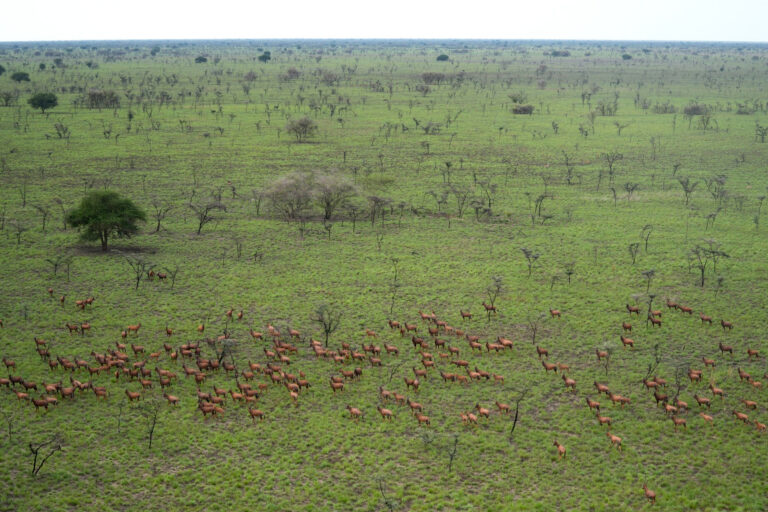
The lines on the map resemble the gossamer threads of dense spiders’ webs. Conservationists in South Sudan call them the “lines of life.” The map was made by joining up millions of points of data recorded by GPS collars attached to 262 migratory antelopes since 2023. The different colors denote four different migratory species: white-eared kob (Kobus kob leucotis), tiang (Damaliscus lunatus tiang), Mongalla gazelle (Eudorcas albonotata), and bohor reedbuck (Redunca redunca). Their seasonal movements across South Sudan’s Great Nile Migration Landscape collectively represent the largest mammal migration on the planet, totaling around 6 million animals. The “lines of life” map denotes years of GPS data collected for four different species of migratory antelope living across the Great Nile Migration Landscape: yellow for the tiang; red for the bohor reedbuck; blue for the white-eared kob and white for the Mongalla gazelle. Image courtesy of Inge van den Meiracker. Most of these movements occur outside the boundaries of Boma and Badingilo national parks, a landscape shared with an estimated 1 million people, their cattle, and growing numbers of new towns, roads, and mines. The “lines of life” are helping conservationists to figure out where to concentrate their efforts to ensure the wildlife can keep on moving. “There are some [wildlife] corridors that come out of this, like the high-use areas, which we do now have a better handle on,” says Megan Claase, conservation manager for African Parks, the South Africa-based NGO that co-manages Boma and Badingilo with the South Sudanese government.…This article was originally published on Mongabay