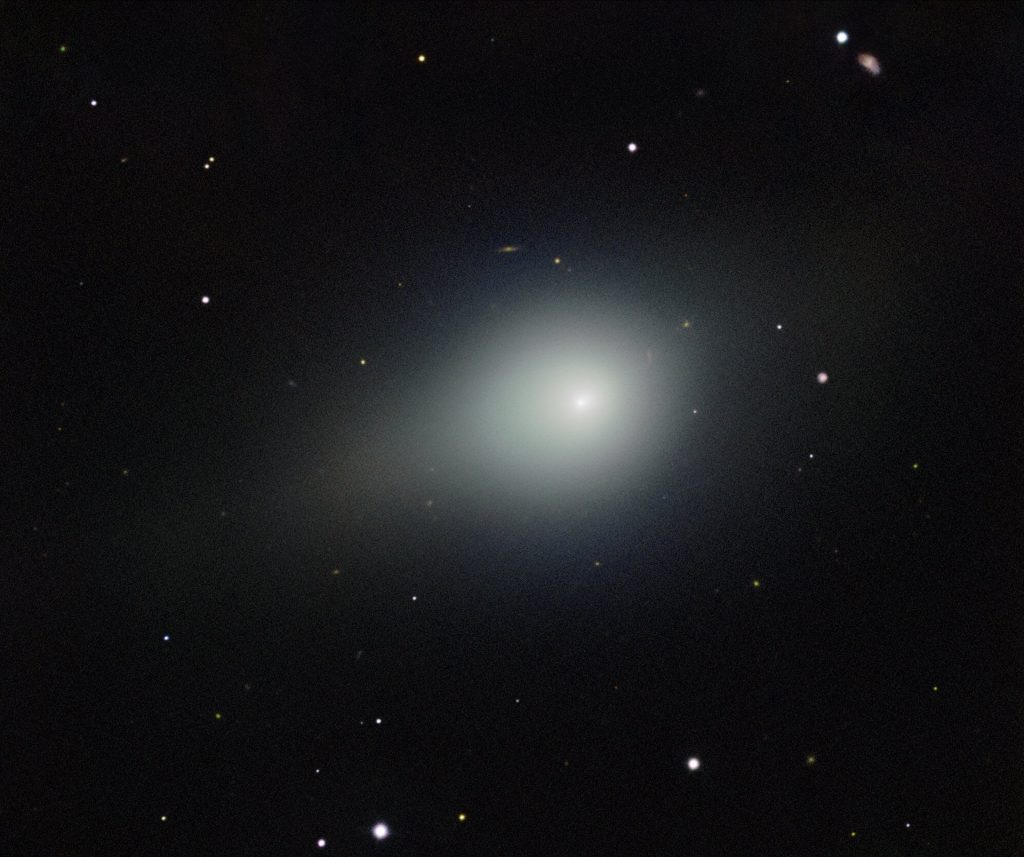
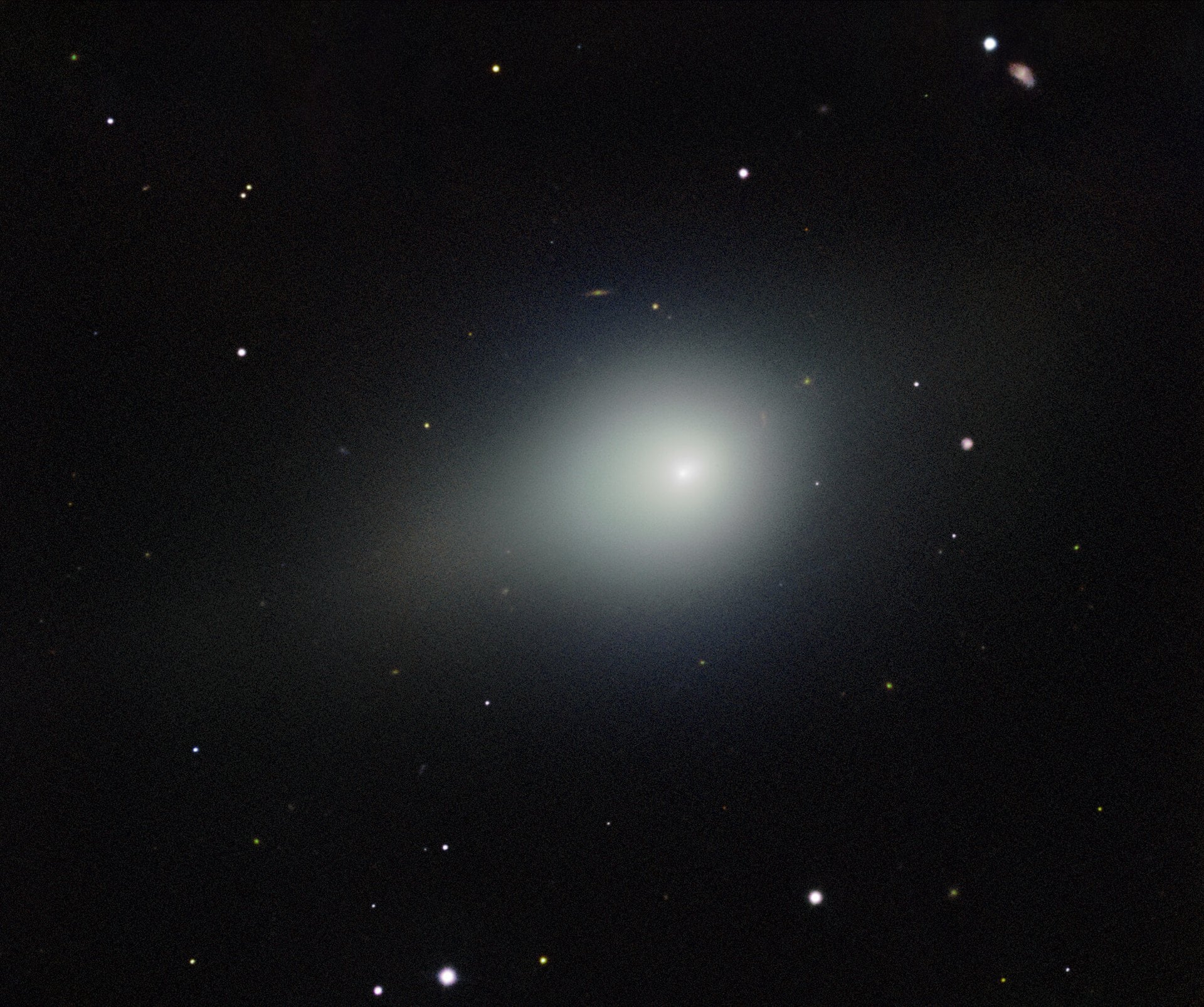
Ever since 3I/ATLAS buzzed through the Solar System, swinging by Earth and then looping around the Sun, scientists have been investigating the origin of this comet. As just the third interstellar object (ISO) detected by astronomers, 3I/ATLAS experienced considerable outgassing before and after it made its closes pass to the Sun. However, the outbursts of material that came after it emerged were truly revelatory as they provided data on its interior composition.
By analyzing the spectra of the material the comet shed, scientists learned a great deal about the origin of this interstellar visitor. In a new paper that appeared in the Monthly Notices of the Royal Astronomical Society, a team of researchers revealed that the comet formed in extremely cold conditions, likely in the far reaches of its home star system. This remarkable first for astronomers could have significant implications for future ISO research.
Using the WHT Enhanced Area Velocity Explorer (WEAVE), a new multi-object spectrograph mounted on the Isaac Newton Group’s (ING) 4.2m William Herschel Telescope (WHT), the team examined the ionized gases released by 3I/ATLAS as it emerged from behind the Sun and began leaving our Solar System. By combining WEAVE’s Large Integral Field Unit (LIFU) spectroscopy with the WHT’s new guiding capabilities, the team identified five different ions produced simultaneously in the comet’s stream.
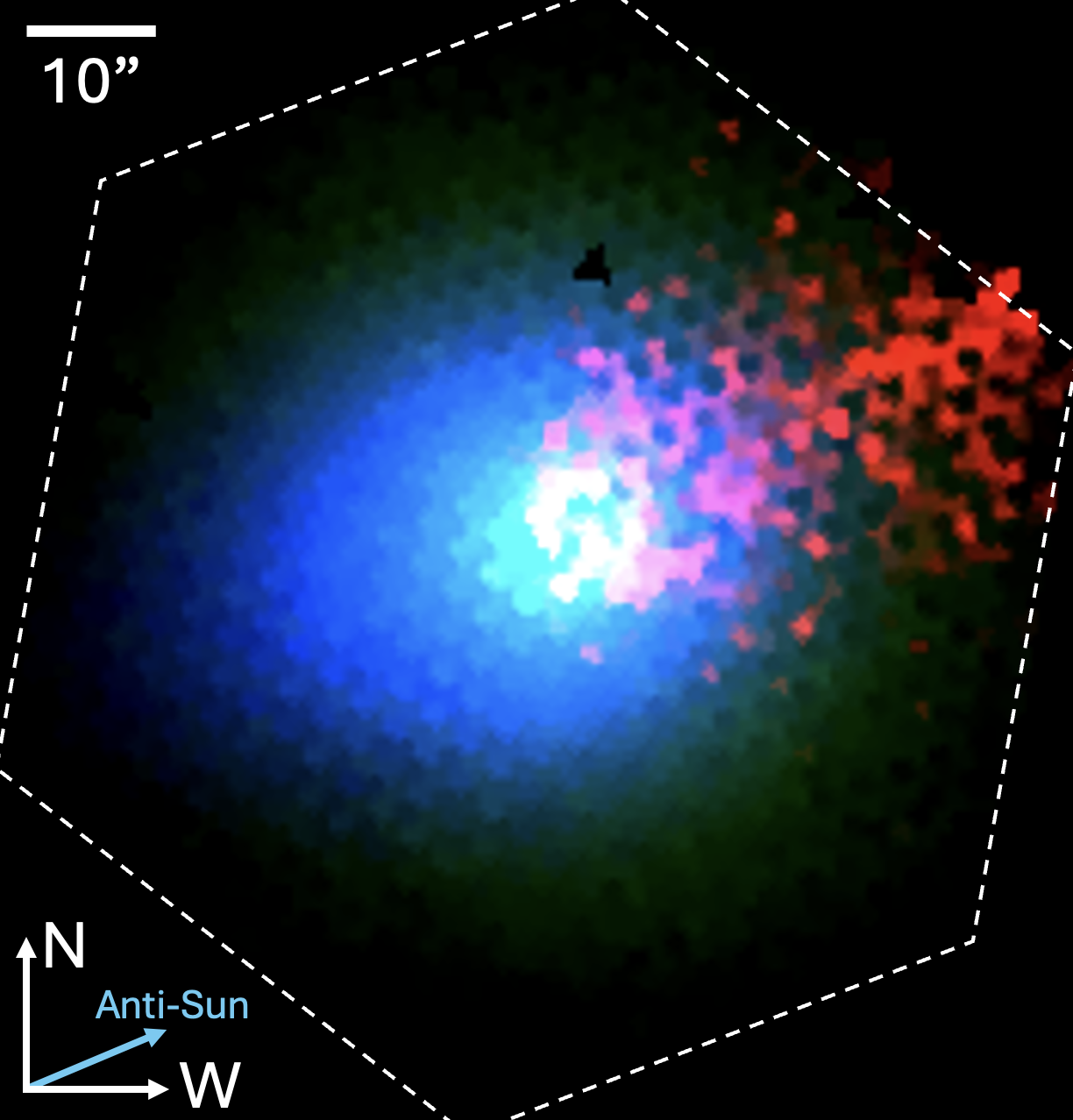 This figure illustrates the different distributions of dust (blue), gas (green), and ions (red) in 3I/Atlas. Credit: Lea Ferellec (CC BY 4.0)
These included ions of dinitrogen (N2), carbon monoxide (CO+), carbon dioxide (CO2+), hydrogen (H2O+), and hydrocarbons (CH+). By measuring the ratio of dinitrogen gas to carbon monoxide, the researchers determined that 3I/ATLAS formed in conditions colder than -240°C (-400 °F). This suggests that it formed far from its star in the distant, icy edge of its solar system – similar to objects in the Solar System’s Kuiper Belt or Oort Cloud.
Dr. Léa Ferellec, a Research Fellow at the University of Northumbria’s School of Engineering, Physics and Mathematics and the study’s lead author, explained in a Royal Astronomical Society (RAS) press statement:
This object gives us a rare chance to study material that formed somewhere completely different to our own Solar System. Finding that it’s so rich in nitrogen tells us it likely formed in extremely cold conditions, far from its home star. Every one of these objects we study helps us understand a little more about how planets form around other stars.
The team also examined how the ion ratios varied along the comet’s tail, which forms when solar wind sweeps the charged particles out behind it. They detected only a marginal decrease in hydrocarbon ions the farther they traveled along the tail. This analysis constitutes the first time that this level of detail has been captured with an ISO. Said co-author Rubén Sánchez-Janssen
Powerful, large-format IFUs with high sensitivity in the blue optical spectrum – like WEAVE-LIFU on the WHT – are opening new frontiers for the study of comets and other solar system objects. This discovery is a perfect example of the value of DDT, which is specifically designed to enable observations of exceptional and urgent scientific importance.
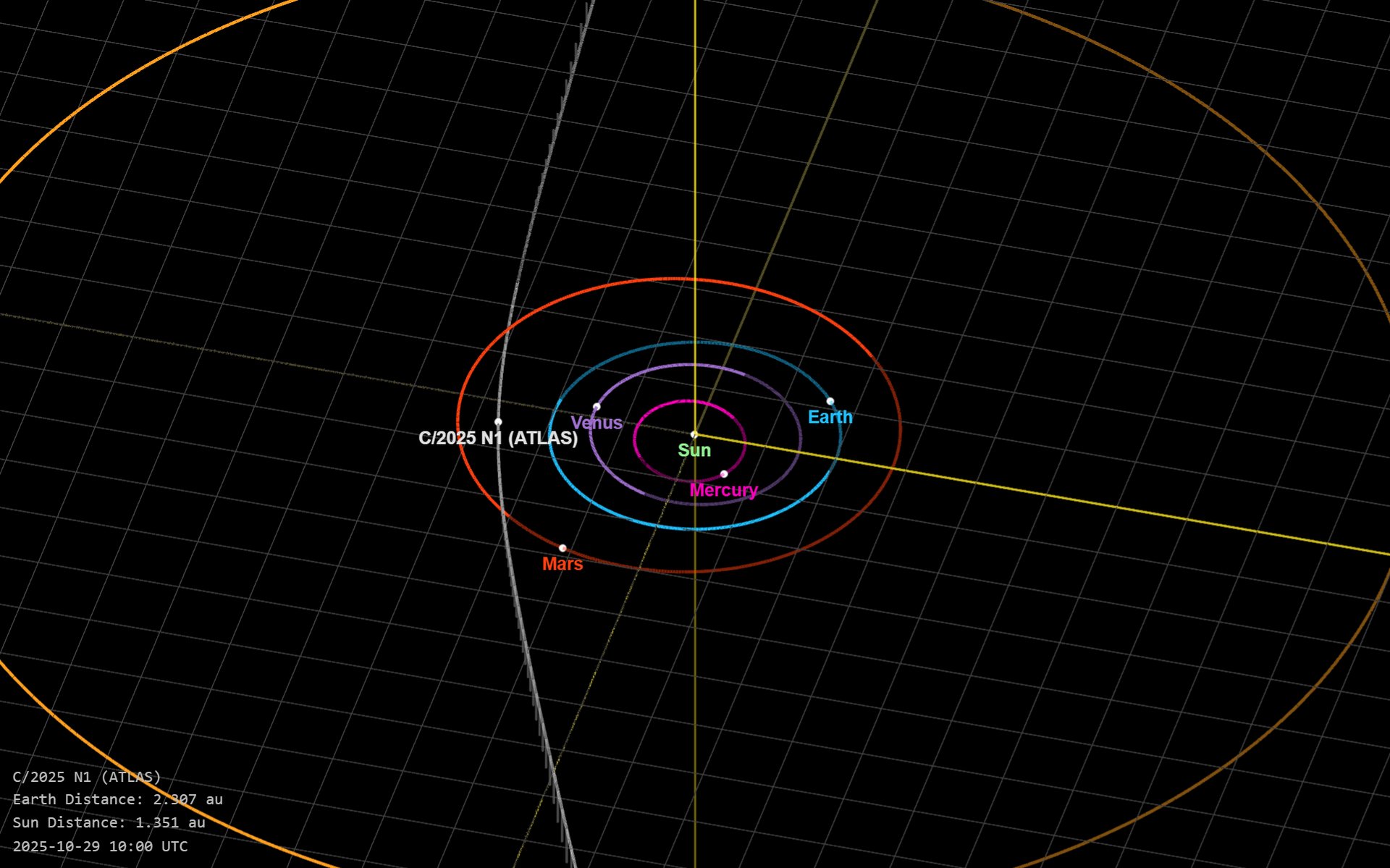 Comet 3I/ATLAS at perihelion. Credit: NASA/JPL.
Asteroids and comets are essentially material leftover from the formation of a solar system. As a result, ISOs that periodically enter our system present opportunities to study conditions around other stars without having to visit them. Since 2017, when ‘Oumuamua was spotted flying past Earth, scientists have been able to achieve greater and greater returns on their observations, thanks to improvements in instruments and methodology. When the fourth ISO ever detected is spotted, scientists could learn even more about its composition and origin.