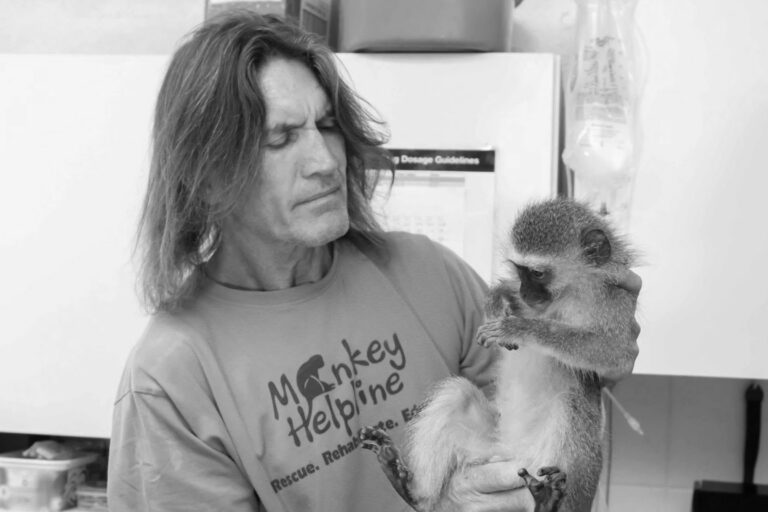
In 2015 Steve Smit badly injured his right eye while trying to round up rescued chickens in his garden in Westville, near Durban. A branch struck him and almost cost him his sight. Doctors told him to rest. Within weeks he had gone on more than 20 wildlife rescues, wearing an eye patch. For three decades Smit climbed trees, crossed roofs, crawled under buildings, and entered gardens to retrieve vervet monkeys that had been shot, shocked on power lines, hit by cars, bitten by dogs, or caught in wire. Around KwaZulu-Natal he became known simply as the “Monkey Man.” He died on August 12th after a battle with cancer. He was 70. Before rescuing monkeys became his full-time occupation, Smit spent roughly 25 years in South Africa’s intelligence services. He had first joined the police after objecting to military conscription, and later moved through the Bureau of State Security and National Intelligence Service. In an oral-history interview in 2007, he recalled being troubled by the conduct and culture of some of the institutions in which he worked. His involvement with animals began while he was still in government service. In 1985 he founded FALCON, the Front for Animal Liberation and Conservation of Nature, described as South Africa’s first animal-rights organization. It later became Justice for Animals. Smit campaigned against vivisection, recreational hunting, circuses, wildlife trade, and other uses of animals that he regarded as exploitation. His position often put him at odds with conservationists. Smit was concerned not only with…This article was originally published on Mongabay