

Industrial buyers are recalculating distance, risk, and inventory as regional sourcing changes the economics of supply.
By Luz Maritza Sanchez, Customer Experience & Corporate Reputation Coordinator, Grupo Ortiz
For years, industrial procurement teams have evaluated sourcing decisions through a narrow lens: unit price. This approach worked well when global freight was relatively predictable, tariff exposure could be modeled in advance, and long lead times could be offset with disciplined safety stock,but that environment has changed. Buyers are now measured not only on savings, but on continuity, working capital discipline, documentation, and the speed at which a supplier can help recover when demand, logistics or compliance requirements shift.
This shift does not mean long-distance suppliers should be removed from every category. Instead, procurement leaders are distinguishing stable, high-volume purchases from inputs that directly affect production schedules, customer commitments or regulatory documentation. In these categories, the lowest quoted price is only truly competitive if it remains viable after accounting for freight volatility, inventory buffers, service disruptions and the cost of emergency corrections.
Nearshoring has become a practical evaluation tool rather than a geographic slogan. As Industry Today‘s recent coverage of nearshoring and supply chain volatility, has noted, tariffs, geopolitical risk and disruptions across transport lanes are forcing companies to reconsider how much distance their operations can absorb. Thus, the central procurement question is no longer simply where a supplier is located,but how much risk, inventory exposure and decision lag are embedded within each sourcing model.
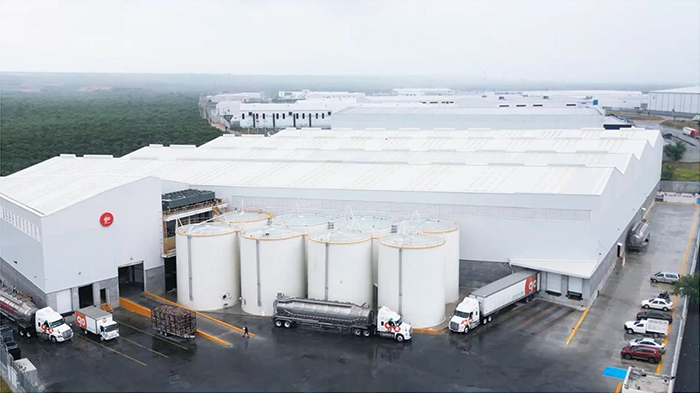
Industrial packaging illustrates this shift clearly. While packaging is rarely the highest-cost input in a finished product, it can still halt production, delay shipments or create documentation gaps when it arrives late, out of specification, or without verifiable evidence. Grupo Ortiz, a Mexican manufacturer of polypropylene industrial packaging serving more than 1,500 active customers across agricultural, food, logistics and manufacturing value chains, offers a useful example of how proximity can shift the sourcing conversation from purchase price to total supply assurance.
A low unit price on a purchase order can conceal costs that appear later: volatile freight, demurrage, detention, expedited shipments, customs delays, inventory in transit and the cost of restoring service when the plan fails. Industry Today‘s analysis, Tariffs Are Here. Should You Reshore or Nearshore?, makes the same point for reshoring and nearshoring decisions: tariff exposure and transportation costs must be considered alongside operating resilience and the true cost of recovery.
Under the USMCA, qualifying regional goods may reduce tariff exposure and simplify commercial planning when rules of origin and documentation requirements are met. For high-replenishment categories, the difference between a five- to 12-day cycle and a cycle measured in several weeks is not merely a logistics advantage. It changes how much inventory must be financed before it can be used in production or converted into revenue.
Manufacturers that operate regionally at scale can therefore affect procurement economics in a structural way. When a supplier processes more than 100,000 tons of resin annually and can deliver to U.S. distribution points within days, the buyer is not simply buying faster transportation. The buyer is buying a shorter planning horizon, lower exposure to demand error and more time to respond before disruption becomes a production problem.
Supply chain risk is not abstract. It appears as delayed orders, rescheduled production, emergency purchasing and missed customer commitments. Ocean freight from Asia can remain suitable for stable, predictable demand. However, it becomes less flexible when quantities need to change, production schedules move or a quality issue requires corrective action. A chain measured in weeks slows feedback. A regional chain measured in days gives procurement and operations more room to intervene.
Nearshoring does not eliminate risk. No sourcing model does. It can, however, reduce exposure to port congestion, trans-Pacific freight swings, documentation delays and communication friction. It also makes plant visits, audits and corrective actions more practical. Shorter cycles do not guarantee resilience, but they make management and recovery operationally possible when conditions change.
When supply takes 60 to 90 days from purchase order to usable inventory, buyers must finance material in transit and carry additional safety stock. That capital is committed before the material creates value. If demand shifts, the inventory is already moving, and the buyer’s ability to adjust is limited.
Regional supply changes that working capital equation. Shorter replenishment cycles allow procurement teams to plan closer to actual demand, reduce exposure to obsolete inventory and align purchasing more tightly with production planning. The benefit is not simply a faster receipt. It is the ability to make decisions with fresher information and less capital locked into assumptions made months earlier.
Compliance is becoming a procurement requirement, not a sustainability slogan. Buyers increasingly need to document tariff treatment, rules of origin, food-contact requirements, supplier practices, ESG data and traceability. The farther the supply base is from the buyer, the harder it becomes to verify real operating conditions and maintain current evidence.
The company’s woven sack plants hold FSSC 22000 certification for food-contact materials. Neo Empaques International operates under ISO 9001:2015 and the AIB International scheme, while its stretch film operations maintain ISO 9001:2015 certification. About 30 percent of the resin processed annually is reintegrated into the production cycle, a metric that can support Scope 3 ESG reporting when buyers require traceable supplier data.
The right question is not Mexico or Asia. It is which sourcing model provides the best combination of total cost, resilience, inventory control and auditability for a specific category. Volatile demand, regulated end markets, food-related applications and high-replenishment products often justify a closer supplier base.
For industrial packaging, the answer lies in lead time, capital tied up in transit, quality verification and recovery speed. Regional suppliers with auditable operations can respond with plant-level data, not just commercial assurances. That is what makes proximity a management tool. It allows buyers to validate, correct and replenish with less decision lag when the operating environment changes.

About the Author:
Luz Maritza Sánchez is Customer Experience & Corporate Reputation Coordinator at Grupo Ortiz, a leading Mexican manufacturer of polypropylene industrial packaging solutions for agricultural, food, logistics, and manufacturing supply chains across North America.