
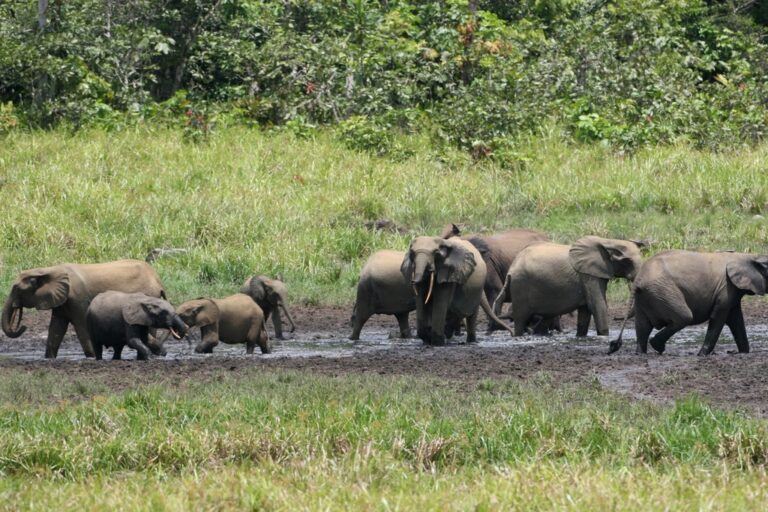
August 12 is World Elephant Day. To celebrate, Mongabay looks back at recent stories about how the future success of these mammals depends on healthy, connected habitats. Asian elephants adjust what they eat A recent study from Malaysia showed that Asian elephants (Elephas maximus) are adapting to rapidly changing landscapes by diversifying their diets — a sign of resilience, but also a warning about the pressures reshaping their habitats. In a heavily logged forested landscape, elephants ate a wide variety of available plants. These findings suggest that beyond formal reserve boundaries, when disturbances make it hard for the mammals to find their preferred plants, they can meet their nutritional requirements by including a broader selection of plants, the researchers say. Meanwhile, elephants within a landscape dominated by oil palm plantations mostly ate the cultivated oil palm crops. This could expose them to conflict. “Our findings highlight that elephants are highly adaptable feeders, but this flexibility often brings them into human-dominated landscapes, increasing the risk of conflict,” Mohammad Saiful Mansor, study lead author from the National University of Malaysia, told Mongabay’s David Brown. A unique clearing in Central Africa draws elephants from the dense forests Throughout most of Central Africa, it’s difficult to spot herds of forest elephants all at once. They move through dense rainforest, remaining elusive, their lives obscured by thick vegetation and distance. For tourists and even researchers, direct encounters are largely a matter of chance. But Dzanga Bai is different, Mongabay’s David Akana reported. Often called the “village of elephants,” this mineral-rich clearing…This article was originally published on Mongabay