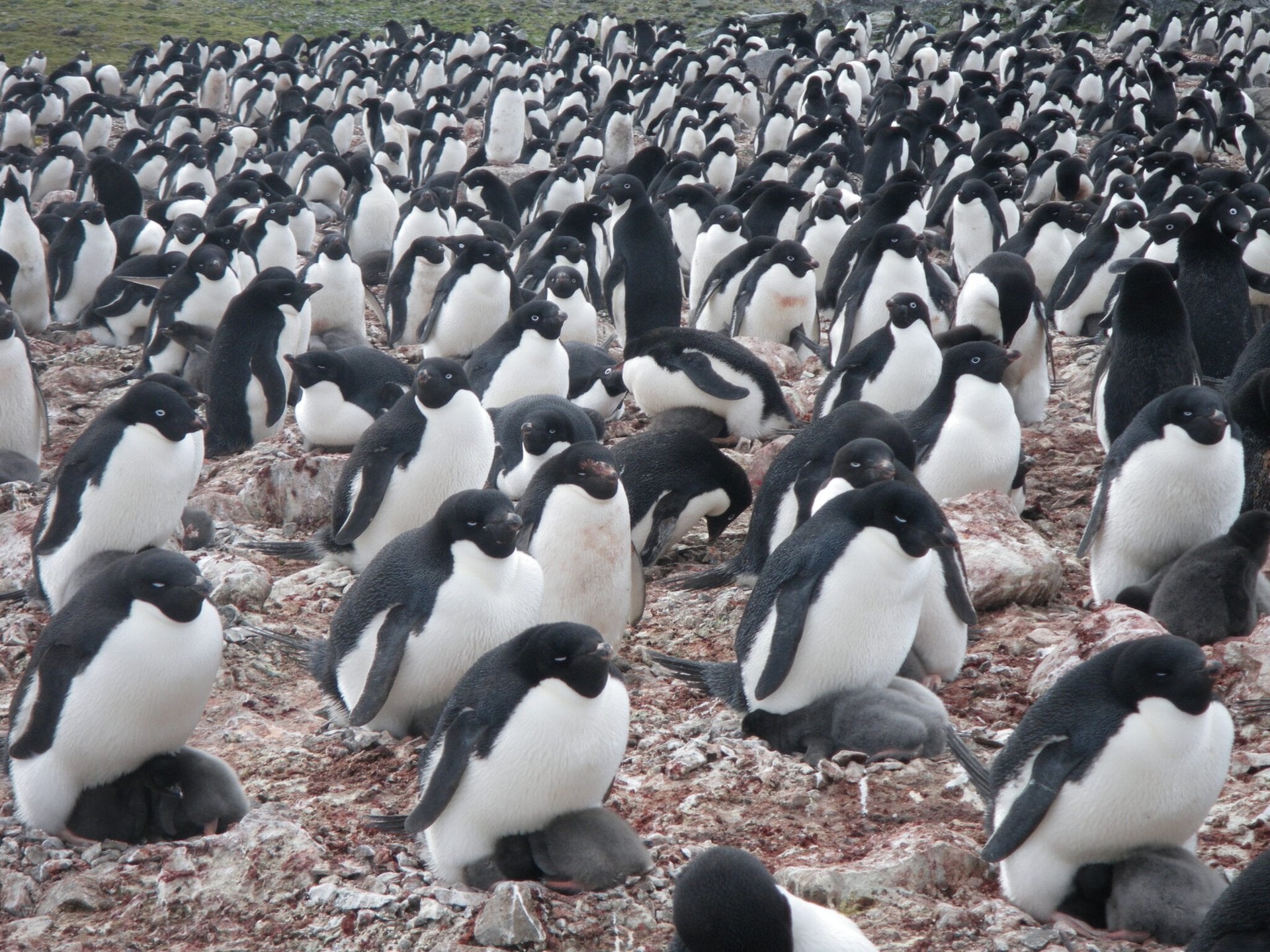
Climate Change, characterized by rising temperatures, sea levels, and ocean acidity, poses an existential risk to countless species around the globe. For species like the Antarctic Adélie penguin, disappearing sea ice and rising acidity and temperatures could lead to their extinction in the coming years. Using 30 years of satellite imagery from the NASA/USGS Landsat mission, a team of researchers studied the eating habits of this penguin species by analyzing the distribution and color of their guano across Antarctica.
Their research, which appears in a study in Current Biology, is a major first for Earth science, where space-based observations were used to capture food-web and population dynamics at a continental scale. Their conclusions were frightening, indicating that global warming and shrinking sea ice are altering penguin diets, with consequences for their health and longevity. Their findings provide measurable insights into how penguin diets and populations correlate with the impacts of climate change.
The research team was led by Clemson University and included researchers from Stony Brook University, UC Santa Cruz, NASA, and other institutions. For their study, they analyzed the color across visible and infrared wavelengths to obtain a “spectral signature” of guano. Based on its color, the team reconstructed the diets of Adélie penguins from 1984 to 2013. This was coupled with sample collections from penguin colonies, which were analyzed in the lab to measure spectral properties.
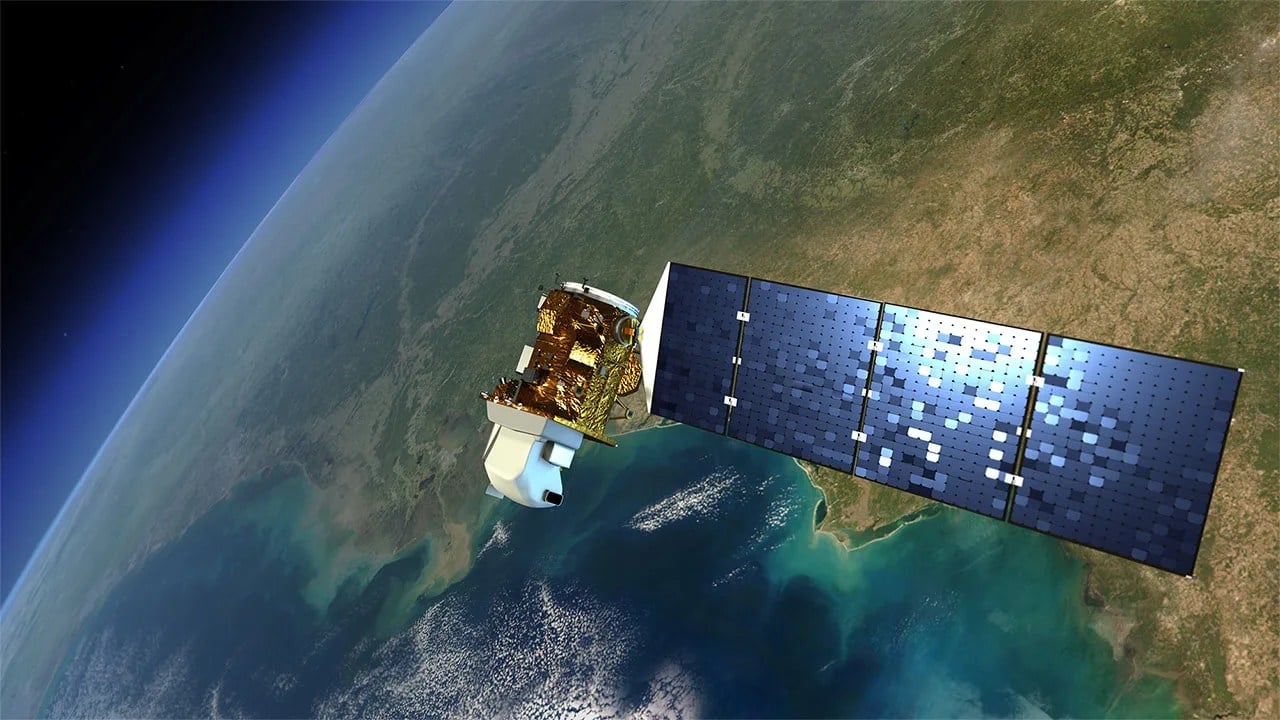 *Artist’s impression of a Landsat satellite. Credit: NASA*
They then ran a stable isotope analysis on these samples to determine where the penguins’ diet fell in terms of more krill or more fish. This is especially important because Adélie penguins typically subsist on fish in areas with more sea ice, but consume more krill in regions where sea ice has decreased. As such, mapping out the species’ dietary patterns served as a useful indicator of broader changes in Antarctic ecosystems due to the impacts of Climate Change.
With the combined data, the team was able to build a model linking guano spectra to diet, which they then applied to Landsat imagery.
The study is the first to use satellite observations to measure food-web dynamics on a continental scale over the span of decades. Previously, studying food webs and population dynamics across all of Antarctica has been difficult due to its vast expanse, remoteness, and the logistical challenges of working in a freezing and windy environment. Whereas researchers could collect samples and monitor populations in some colonies, sampling every colony repeatedly over decades was impossible.
This study also highlights how Earth-monitoring satellites can enable scientists to track environmental changes and their impact on local species. Using Landsat imagery, the team studied penguin colonies across the continent over decades to monitor their feeding patterns. Said Dr. Casey Youngflesh, an Assistant Professor at Clemson University:
Satellites enabled us to do something that would otherwise be impossible. The innovation wasn’t the satellite technology itself, but the ability to leverage these decades of satellite imagery with modern geochemical, statistical, and computational tools. No one intended for these satellites to be used to monitor penguins, but now we’re able to use them in these novel ways.
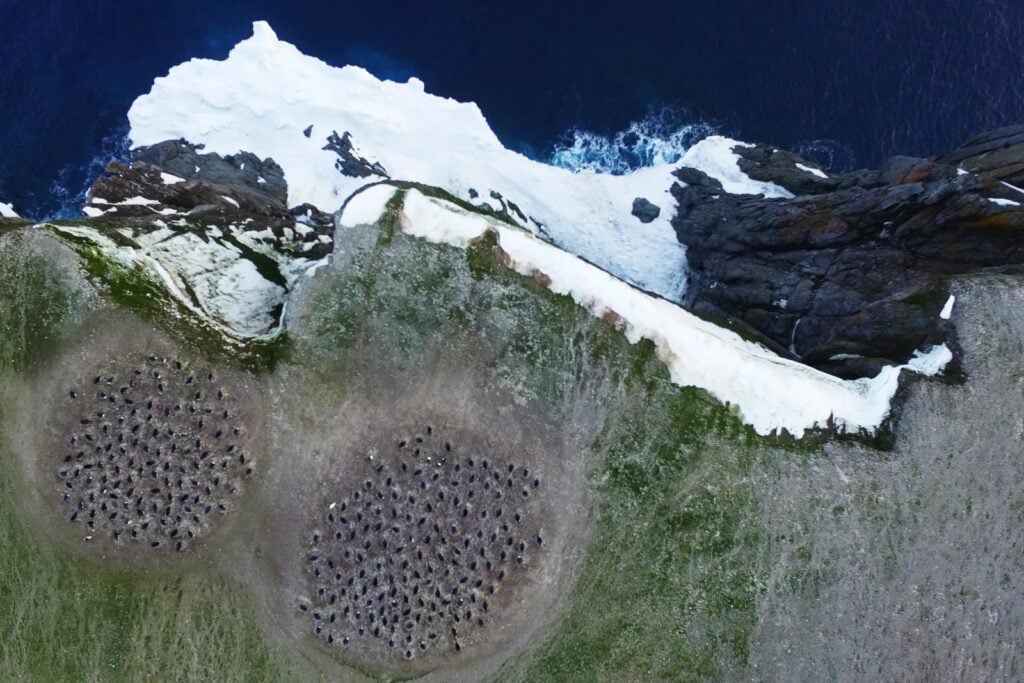 *Penguin colony as seen by drones. Credit: Thomas Sayre-McCord/WHOI/MIT*
The team’s findings have deep implications for the long-term survival of Adélie penguins. While they are among the top predators in Antarctica, their diet is limited to a few prey species, primarily Antarctic silverfish and krill. In addition to being less nourishing than fish, krill is also becoming less abundant in some parts of the continent due to rising temperatures and increased consumption by seal and whale populations (which are currently recovering).
In the years since the study period, scientists have monitored large-scale reductions and record lows in Antarctic sea ice. If those declines continue, Adélie penguins may have to shift toward more krill-dominated diets, with consequences for their long-term survival. Said co-author Michael J. Polito, a professor of ocean sciences at UC Santa Cruz:
Adélie penguins are an iconic species breeding all around the continent of Antarctica. They act as a ‘canary in the coal mine,’ and our study illustrates how recent warming has disrupted the Antarctic marine food web they rely on to the detriment of many of their populations.
We spied on penguins from space by using satellite images to figure [out] what they eat all around Antarctica to help explain their diet and population response to recent climate change. Antarctica has experienced rapid environmental change in recent decades, and this approach gives us a new and powerful tool to learn how it has affected penguins.
Further Reading: UCSC, Current Biology