Ultra-processed foods, the industrially formulated products that fill supermarket shelves from soft drinks and packaged snacks to instant noodles and reconstituted meats, have become the subject of a sweeping new review that maps how scientists around the world are trying to untangle their relationship with the gut microbiome and colon cancer. The analysis, published in the journal Food Production, Processing and Nutrition, combines a narrative synthesis of the mechanistic literature with a bibliometric assessment of research trends, and its central message is stark: the evidence connecting these foods to dysbiosis, chronic inflammation and oncogenic signalling is growing, but the specific link to colon cancer remains strikingly under-studied.
The review, led by Sneha Nayak and Arif Hussain, analysed 273 articles published between 2013 and 2025 that were retrieved from the Scopus database for its bibliometric analysis. For the bibliometric analysis, the authors searched the Scopus database for publications pairing the terms cancer and ultra-processed food, and that search returned 274 documents over the twelve-year window, while the narrative review section drew on literature identified through Google Scholar, PubMed and Scopus. The trajectory tells its own story: a single publication appeared in 2013, while 2024 and 2025 produced 67 and 66 papers respectively, a clear signal of accelerating scientific interest. Country-level analysis showed the United States leading with 85 publications, followed by Brazil with 55 and France with 39, while India contributed six, South Africa three and Malaysia two.
When the authors narrowed the search to colon cancer specifically, the picture changed dramatically. A Scopus query combining colon cancer and ultra-processed food yielded only 13 publications from 2022 onward, with each of the four years examined producing just three or four papers. The United States accounted for six of those publications, Brazil four and France three, while countries including Greece, Italy, Norway, Denmark, Finland, Germany, Iran, Mexico, Portugal, Spain and the United Kingdom produced a single paper each. This scarcity, the authors argue, underscores how little direct research exists on the association between ultra-processed food consumption and colon cancer, even as broader cancer-related work expands rapidly.
Ultra-processed foods occupy Group 4 of the NOVA classification system, which sorts foods by their degree of processing rather than their nutrient content. These products contain little or no intact whole food and are engineered to be convenient, affordable and highly palatable, built from substances derived from foods such as oils, fats, starches, sugars and protein isolates, then spiked with flavourings, colourings, emulsifiers and preservatives. Their reach is enormous. According to a 2025 report from the Centres for Disease Control and Prevention cited in the review, ultra-processed foods supply about 61.9 percent of average daily calories among American youths and 53 percent among adults.
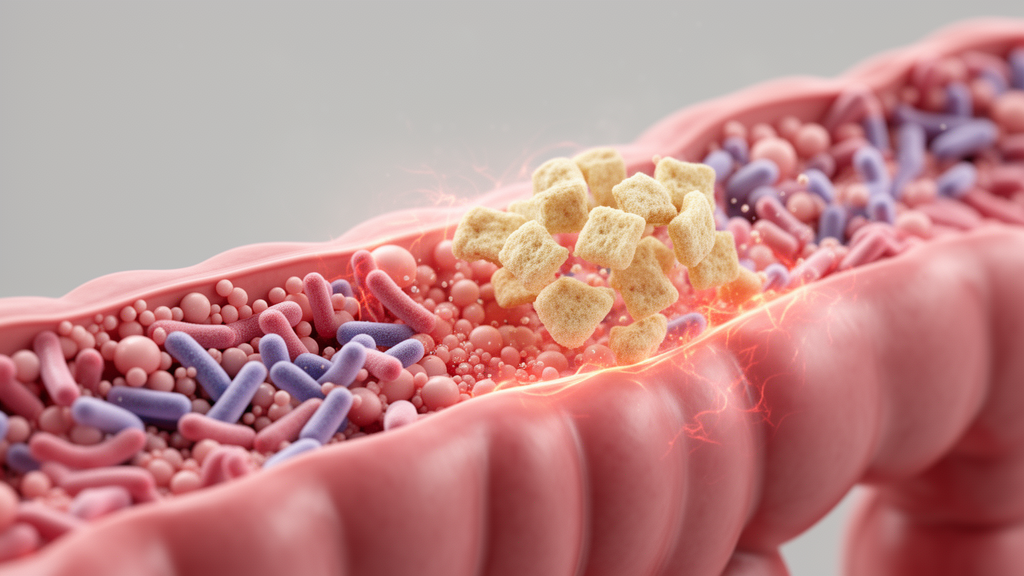
The mechanistic core of the review concerns what these foods do to the trillions of microbes that inhabit the large intestine. A healthy gut harbours beneficial organisms including Bifidobacterium, Lactobacillus and Faecalibacterium prausnitzii. Dysbiosis, the loss of these beneficial microbes and the overgrowth of opportunistic species such as Enterobacteriaceae, Clostridium difficile and Bilophila wadsworthia, is strongly associated with regular consumption of ultra-processed foods, which are rich in refined sugars, unhealthy fats, sodium and synthetic additives but low in dietary fibre. Because fibre and accessible carbohydrates are the primary energy sources that good microbes ferment into short-chain fatty acids such as butyrates, acetates and propionates, fibre-poor ultra-processed foods effectively starve them. Deprived of their usual fuel, these microbes shift to alternative substrates, including amino acids from proteins and the host’s own protective mucus layer, a switch the review links to mucus thinning, lost gut barrier integrity, inflammation and ulcer-like damage that allows pathogenic bacteria to gain dominance.
Individual additives come under particular scrutiny. Preservatives such as sodium benzoate, potassium sorbate and calcium propionate have been reported to cause dysbiosis, increasing pro-inflammatory bacteria while reducing lactobacillus and Bifidobacterium loads and decreasing short-chain fatty acid production. Nitrites and nitrates used as preservatives can convert to nitrosamines in the body, compounds the review describes as proven carcinogens. Emulsifiers, added to keep oil and water mixed, have shown the potential to disrupt the gut mucus layer and promote intestinal inflammation in animal models. Artificial sweeteners including sucralose, saccharin and acesulfame K are linked to microbiome dysbiosis and glucose intolerance, while synthetic dyes such as tartrazine and sunset yellow have been associated with increased ADHD-like behaviour in children, allergic reactions and possible endocrine disruption.
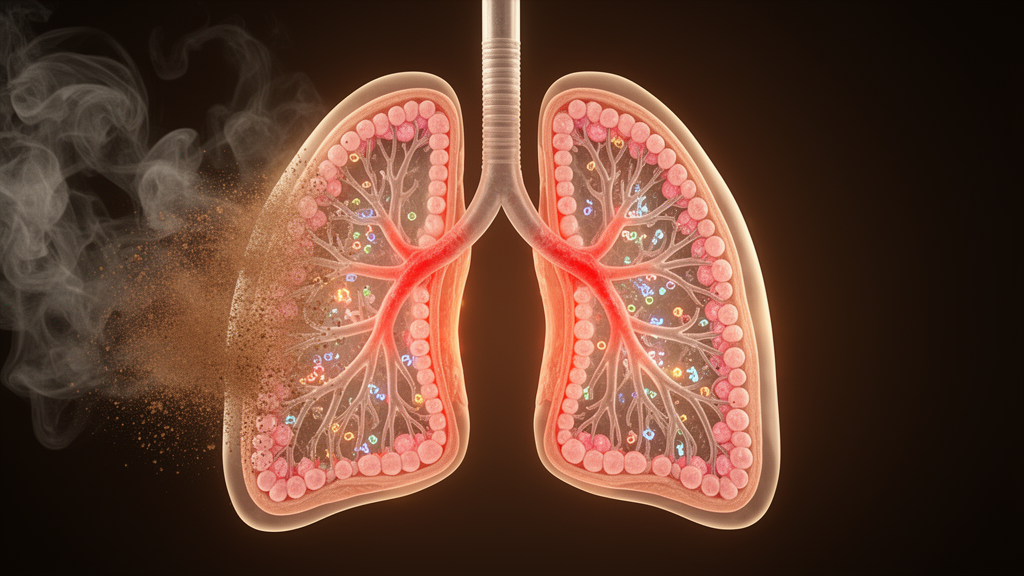
The review then traces how these microbial disturbances may feed into inflammatory and oncogenic pathways. Endotoxins such as lipopolysaccharides, bacterial toxins and oxidative stress are known to activate the NF-κB signalling pathway, a molecular switch that, once triggered, drives production of the pro-inflammatory cytokines IL-1β, IL-6 and TNF-α. Sustained activation promotes chronic low-grade inflammation driven by reactive oxygen and nitrogen species, and it further switches on genes involved in uncontrolled cell proliferation and anti-apoptotic signalling, creating a microenvironment conducive to oncogenesis. These inflammatory conditions can damage DNA, impair DNA repair mechanisms and promote mutations, and several studies have reported increased colonic polyp formation, growths widely regarded as precursors to colorectal cancer.
Supporting this mechanistic chain, the review cites a human observational prospective cohort study involving 142,052 participants, all of whom had undergone at least one lower gastrointestinal endoscopy during medical follow-ups, as evidence that colonic polyps are widely regarded as precursors to colorectal cancer. Polish observational analysis of hot dogs found mean nitrite and nitrate concentrations of 60.3 and 72.63 milligrams per kilogram, with a single daily serving exceeding acceptable levels in at least one sample for people aged 13 and above, and more than 19 samples surpassing limits among children aged one to two.
The bibliometric mapping also reveals where research attention has clustered and where it has not. Keyword co-occurrence analysis using VOSviewer identified three thematic clusters in the broader cancer literature: an epidemiological cluster centred on fast food, processed food and risk factors in human cohort studies; a dietary behaviour and gut microbiome cluster focused on mechanistic and nutritional research; and a metabolic and lifestyle cluster linking dietary patterns to cardiovascular disease. For the colon cancer search specifically, the density map showed that most publications emphasise human-based dietary studies while mechanistic and microbial links are much less represented, a gap the authors identify as the field’s most pressing weakness. They call for more cohort and prospective studies, noting that the available evidence on ultra-processed foods and colon cancer remains limited and that more studies with detailed mechanistic insights and long-term impacts are required before solid conclusions can be drawn.
Beyond the laboratory, the review turns to what can be done now. The authors advocate clearer, more transparent nutritional labels with larger fonts, noting that many manufacturers currently print labels in three to four millimetre type that meets minimum regulatory requirements but is difficult to read, and they highlight emerging practices such as front-of-pack ingredient breakdowns, QR codes translating nutritional information into multiple languages and Braille-formatted labels. They also point to natural alternatives, including phytochemicals such as eugenol and allicin from cloves, ginger and garlic as potential preservatives, and plant-based biopolymers as coating agents. Artificial intelligence may play a role too: one study of Dutch national food consumption survey data used clustering algorithms and six machine learning classifiers, achieving prediction accuracies between 60 and 68 percent, with age, body mass index and educational level emerging as the strongest predictors of dietary behaviour. For the authors, the path forward lies in reducing ultra-processed food intake among young people through awareness, exposure limits and stricter regulatory policy, before the microenvironment these foods may create has a chance to do its damage.
Subject of Research: Bibliometric and narrative review of links between ultra-processed food consumption, gut microbiome dysbiosis and colon cancer
Article Title: Demystifying the link between ultra-processed food, gut microbiome dysbiosis, and colon cancer: a narrative and bibliometric review
Article References: Nayak, S., & Hussain, A. (2026). Demystifying the link between ultra-processed food, gut microbiome dysbiosis, and colon cancer: a narrative and bibliometric review. Food Production, Processing and Nutrition, 8(1), Article 61. https://doi.org/10.1186/s43014-026-00407-7
Image Credits: AI Generated
DOI: 10.1186/s43014-026-00407-7
Keywords: ultra-processed food, gut microbiome, dysbiosis, colon cancer, food additives, NF-kB pathway, short-chain fatty acids, nitrosamines, bibliometric analysis, NOVA classification, food labelling, artificial intelligence
Tags: Artificial IntelligenceBibliometric analysiscolon cancerdysbiosisfood additivesfood labellingGut microbiomeNF-kB pathwaynitrosaminesNova classificationshort-chain fatty acidsultra-processed food