
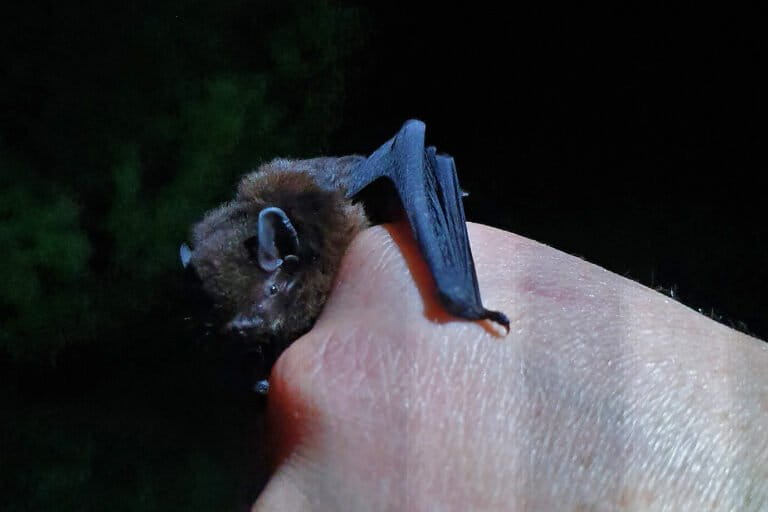
Bat Week, from Oct. 24-31, 2026, is a worldwide celebration of bats — a group that makes up 20% of all mammals. Bats live on all continents except for Antarctica, and provide major ecosystem services such as mosquito control, pollination and seed dispersal. Despite their ecological importance and ubiquity, bats still remain poorly understood. Here we highlight some stories on bats that Mongabay has reported in the last year: India has a wealth of bats, but our knowledge of them is poor India is home to 135 known bat species but, according to the first nationwide assessment of the country’s bats, much about the mammals remains poorly understood, reports Mongabay’s Shreya Dasgupta. Of these 135 species, seven are listed as threatened on the IUCN Red List, while 35 species are data deficient or not listed at all, meaning their conservation status isn’t known. “Bats are the most diverse order of mammals in [India],” Rohit Chakravarty, report co-author and India program manager of the nonprofit organization Bat Conservation International (BCI), told Mongabay by email. “[Yet] there are less than 50 dedicated bat researchers in the country so there’s an urgent need for prioritizing research topics, species, geographical areas.” Community project targets New Zealand’s bats The only known native land mammals still in New Zealand today are two species of bats: the New Zealand long-tailed bat (Chalinolobus tuberculatus) and the New Zealand lesser short-tailed bat (Mystacina tuberculata). A third species, the New Zealand greater short-tailed bat, Mystacina robusta, not recorded since 1967 is likely extinct. A…This article was originally published on Mongabay