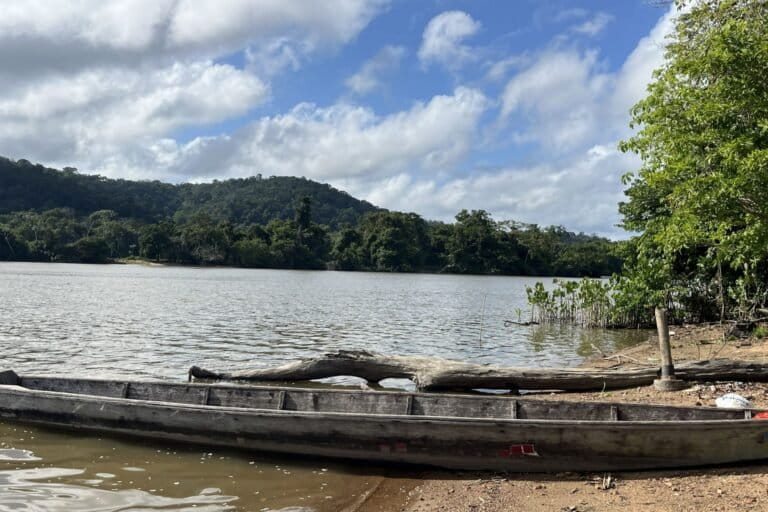
KAWEMHAKAN, Suriname — Beneath thousands of square kilometers of rainforest here lie vast deposits of gold and other minerals. Around a million ounces are extracted legally every year, but much more remains buried throughout the Amazon. In some of the farthest-flung parts of the rainforest, such as these small villages along the border with French Guiana, the government hasn’t stopped locals — joined by Brazilian miners and Chinese traders — from clearing the forest in search of gold. Moving up and down the Lawa River and its tributaries, these criminals establish mining camps and trading posts far beyond the reach of most law enforcement, where robberies, extortion and other violent crimes happen out of sight. Many Indigenous Wayana families live on both sides of the Lawa River — which also marks the border with French Guiana — and face a growing list of challenges, including health issues from mercury use on their land and dwindling wildlife populations they’ve long relied on for food. Indigenous Wayana communities have lived in the area for generations but still lack an official land title that might offer some protection. The only airstrip for kilometers around, and the primary practical connection to the capital, Paramaribo, sits in the middle of one of the Indigenous villages, giving leadership some leverage with miners and traders: Unless they want to travel for days by river to get back and forth from the city, it’s important to be on good terms with the community, residents said. These delicate relationships…This article was originally published on Mongabay