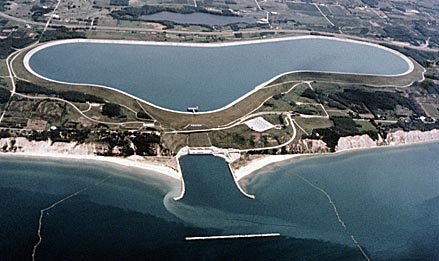

Calling 2025 “the year of the water battery,” the International Hydropower Association (IHA) touted new global pumped storage additions in its 2026 World Hydropower Outlook.
IHA said a total of 28 GW of hydropower capacity was commissioned last year, including a record 11.7 GW of pumped storage. For the first time, global pumped storage capacity has surpassed 200 GW, with a further 243 GW currently under construction worldwide.
“While conventional hydropower remains essential for low-carbon electricity generation, increasing shares of wind and solar power are driving growing demand for flexibility, balancing services and long-duration energy storage,” the association said. “As a result, pumped storage is becoming a strategic priority in major electricity markets worldwide.”
Global installed hydropower capacity, including both conventional hydropower and pumped storage, reached 1,469 GW in 2025.
China remained the leader in hydropower development in 2025, accounting for more than 40% of global capacity additions. The country now has more than 300 GW of hydropower under construction, including 218 GW of pumped storage.
IHA cited last year’s start of construction on the Yarlung Zangbo River Hydropower Project, which is projected to become the world’s largest hydropower facility, capable of generating roughly three times as much electricity as the Three Gorges Dam.
In North and Central America, IHA said governments are increasingly focused on modernizing conventional hydropower plants, extending the lives of existing facilities and developing new pumped storage projects. Canada fully commissioned the 1.1-GW Site C project in British Columbia during 2025, while the U.S. advanced major permitting reforms and fast-track measures to support modernization efforts and new infrastructure.
More than 60 GW of pumped storage projects are now in development across the U.S., the association said.
The report also identified growing demand from data centers and artificial intelligence as a major emerging driver for hydropower worldwide. In North America, technology companies including Google and Microsoft signed landmark long-term hydropower supply agreements during 2025.
Despite strong momentum globally, IHA’s outlook warns that significant barriers continue to slow hydropower deployment in many markets. The report said financing constraints, permitting delays, transmission bottlenecks, climate-related hydrological variability and regulatory uncertainty remain major obstacles to both conventional hydropower and pumped storage development.
Originally published in Factor This Power Engineering.